
Last updated October 16, 2026
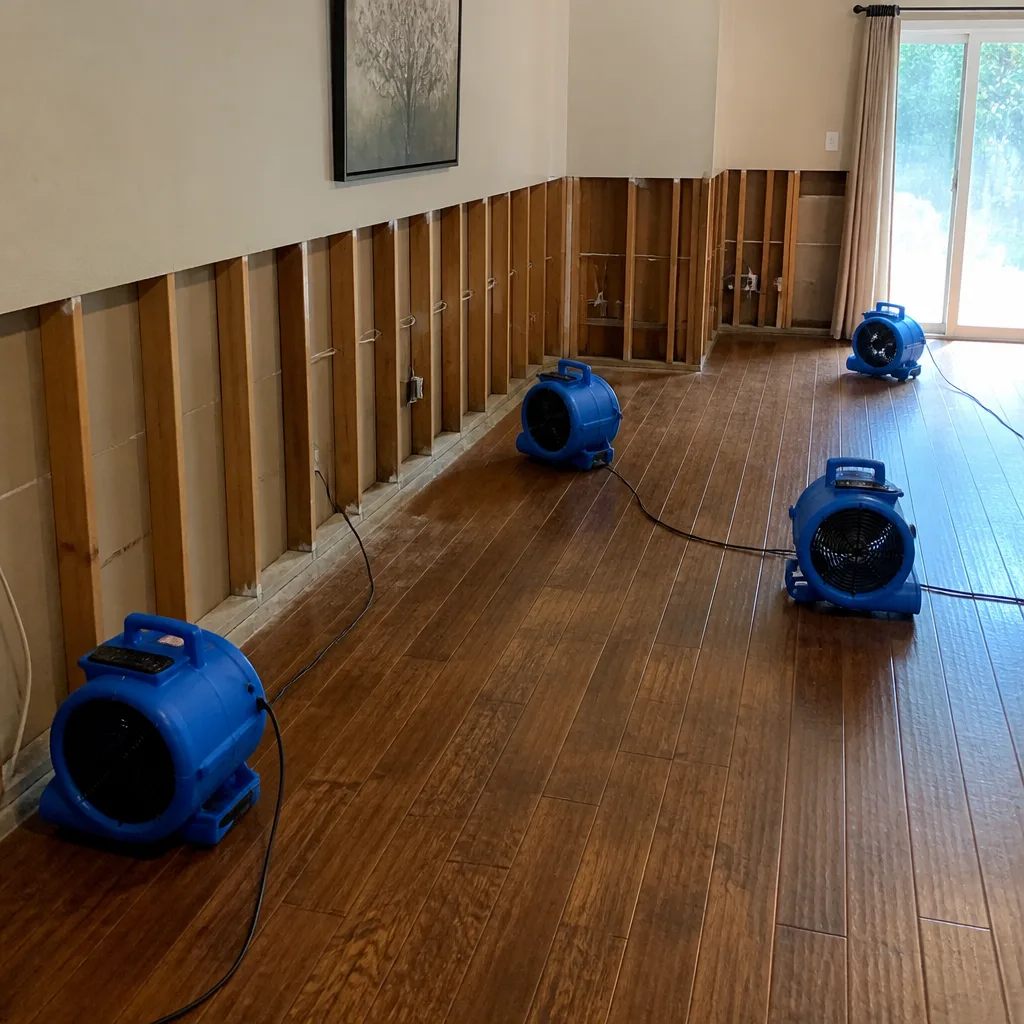 Water damage drying
 Fire & smoke cleanup
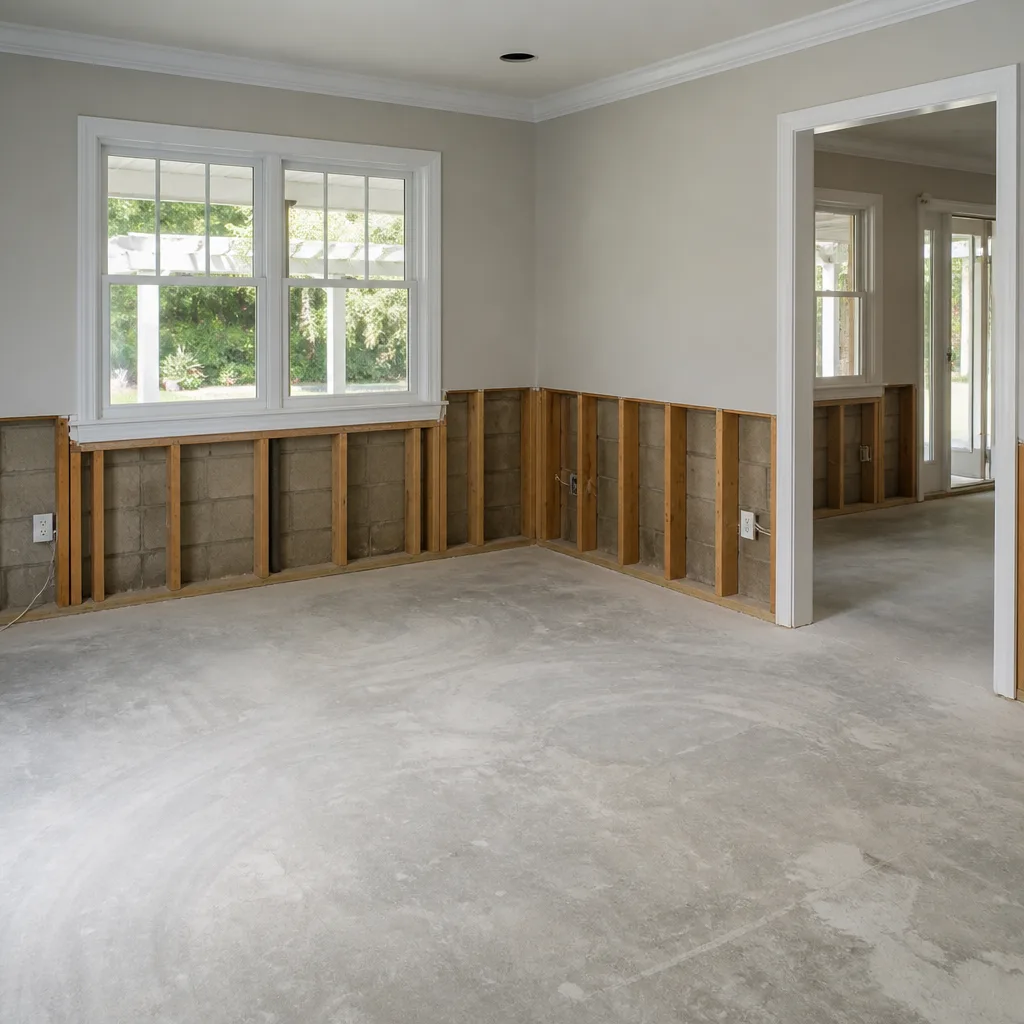 Mold remediation
 Storm response
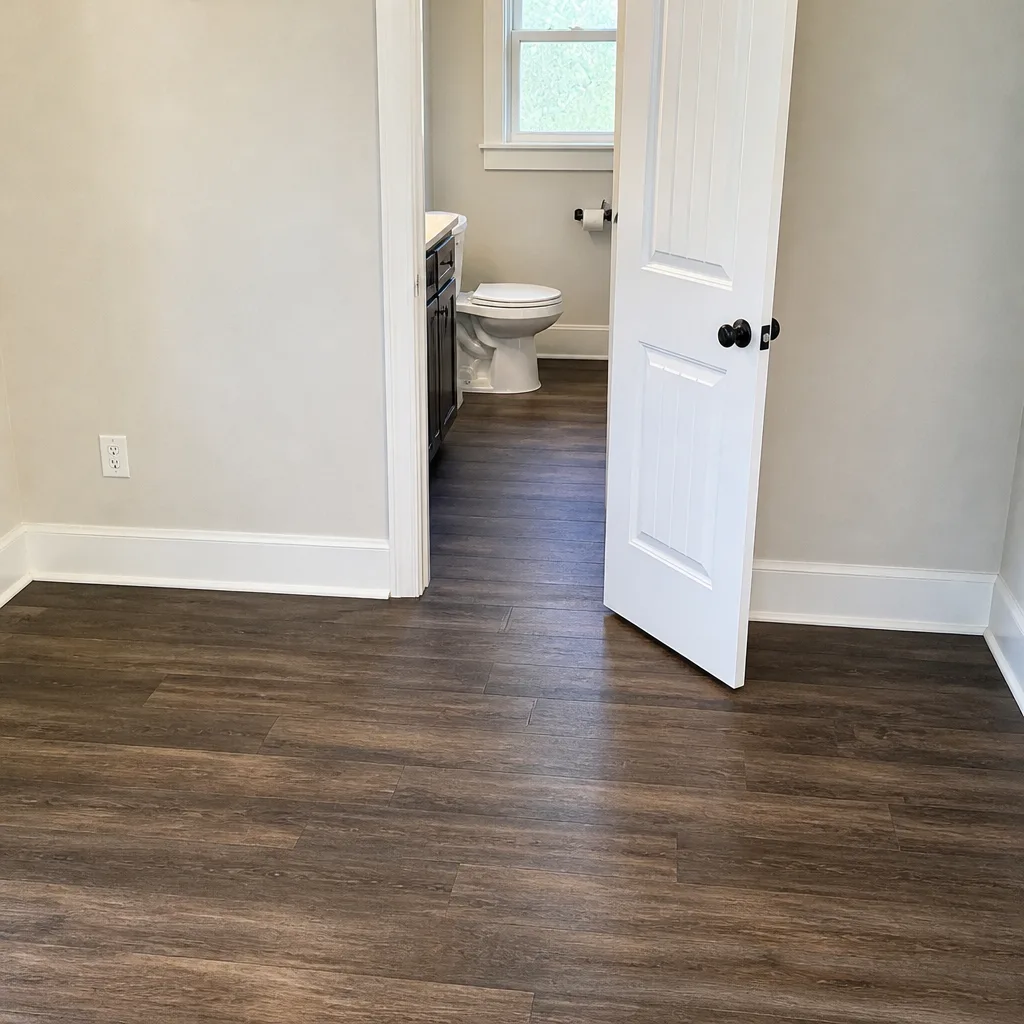 Sewage cleanup
 Reconstruction
Free visual inspection and a written scope of work before any mitigation begins - photos, moisture readings, and drying logs go in your claim file
The scope we write is the scope we bill. Anything new gets shown to you, in writing, before we touch it.
Get your free estimateDIY vs Professional Damage Restoration: The Miami Homeowner’s Decision Guide
A dehumidifier from Home Depot pulls about 50 pints of water out of the air per day. A professional LGR (low-grain refrigerant) dehumidifier pulls 150 pints or more, and it works alongside air movers, floor mats, and injectidry systems that force air into wall cavities no homeowner can reach. The gap between those two numbers is why DIY drying fails in Miami’s climate even when it looks like it worked. This guide walks through the real math, the hidden mold liability, and a three-category framework for deciding what you can handle yourself, what needs pro equipment, and what should never be touched without certified help. For related reading, see our Water Damage Restoration Maintenance Checklist for Miami Homeowners.
Quick Answer
You can safely DIY small Category 1 water spills under 10 square feet if you catch them within 24 hours and dry them completely. Anything larger, any Category 2 or 3 water, any water touching drywall, framing, or HVAC, and anything where Miami’s humidity has had time to settle in needs professional drying equipment and moisture documentation. The DIY savings disappear the moment residual moisture turns into mold, which in Miami’s climate can happen inside 48 to 72 hours.
Restoration work we handle
Table of Contents
- The Three-Category Framework: What You Can DIY, What You Can’t
- Why Miami’s Humidity Makes “Feels Dry” a Lie
- The Mold Liability Math: $400 of DIY Turning Into $12,000
- What “Professional” Actually Requires in Florida
- The Insurance Documentation Consequence of DIY
- The Equipment Gap: What Professionals Bring That Rentals Don’t
- The Partial DIY Trap: Why Doing Half the Job Is the Most Expensive Option
The Three-Category Framework: What You Can DIY, What You Can’t
Most online guides frame this as a binary: DIY or hire a pro. We’ve spent nearly two decades responding to water damage across Miami, from Coral Gables condos to Cutler Bay single-family homes, and the real decision has three categories, not two. Understanding which category your situation falls into determines whether you save money or create a much bigger problem.
Category A: Legitimate DIY (Small, Clean, Caught Immediately)
You can handle the job yourself when all three of these conditions are true: the water source is Category 1 (clean water from a supply line, a sink overflow, rainwater through an open window), the affected area is under 10 square feet, and you caught it within the first 24 hours. A spilled aquarium, a toilet supply line that leaked onto tile for twenty minutes before you caught it, a window left open during a brief shower. These are surface events.
For Category A, a shop vacuum, towels, a box fan, and a standard dehumidifier can work, provided you run them for at least 48 hours and the affected material is non-porous. Tile, concrete, and sealed hardwood can dry. Carpet padding, drywall, and unsealed wood cannot reliably dry with consumer equipment, even in Category A. If water wicked under baseboards or into a wall cavity, you have already moved into the next category.
Category B: Professional Equipment Required, Not Full Restoration
This is the category most guides skip entirely. You do not need a full restoration crew for everything, but there is a middle band where renting or hiring pro-grade drying equipment, paired with professional moisture monitoring, is the difference between a $600 bill and a $6,000 one. Category B situations include water under 10 square feet that has soaked into drywall or carpet padding, Category 1 water that sat for 24 to 48 hours, and any water event where you can see warping, bubbling paint, or swelling baseboards but no sewage or chemical contamination.
In these cases, the water itself is not the main threat. The threat is what Miami’s air does to damp building materials. A homeowner can rent a commercial dehumidifier, but without a moisture meter and the training to interpret the readings, you’re guessing. We regularly get calls from homeowners in neighborhoods like Shenandoah and Little Havana who rented equipment, ran it for five days, touched the wall, felt dry, and returned the unit. Three weeks later, the baseboards are moldy and the drywall smells musty. The surface felt dry. The wall cavity was still holding 18% moisture content, which is a mold incubator in Miami.
Category C: Never DIY (Contaminated Water, Large Areas, Structural Contact)
This category has no gray area. Never attempt DIY restoration when the water is Category 2 (gray water from washing machines, dishwashers, sump pump failures) or Category 3 (black water from sewage backups, toilet overflows with feces, flood water, or any outdoor standing water that has entered the home). Never attempt DIY when the affected area exceeds 10 square feet. Never attempt DIY when water has reached structural framing, subflooring, wall cavities, or HVAC ductwork.
Category C water carries bacteria, viruses, and in Miami’s flood-prone areas, whatever the storm surge brought with it. Category C water that sits in warm, humid air for more than a few hours becomes a biological hazard. The drying is the easy part. The disinfection, containment, and material removal are not. If your situation matches any of these conditions, stop reading this section and call a certified restoration company. Water Damage Restoration in Miami requires full containment, antimicrobial treatment, and often removal of porous materials entirely.
Why Miami’s Humidity Makes “Feels Dry” a Lie
Miami’s average afternoon relative humidity runs between 60% and 75% for most of the year, and summer months routinely push past 80%. That number is not an inconvenience. It is the single most important variable in whether a water damage event dries or rots. Most homeowners do not understand this, because most online drying guides are written by people in Phoenix or Denver, where a wet wall dries itself in 24 hours. For Miami-specific guidance, see our Seasonal Damage Restoration Care for Miami: Year-Round Homeowner’s Guide. In Miami, nothing dries itself.
The problem is the difference between evaporation and equilibrium. Water inside a wall cavity evaporates into the air inside that cavity. Once that air reaches saturation, evaporation stops, because the air cannot hold any more moisture. In a dry climate, that saturated air eventually escapes through the wall, replaced by dry outside air, and evaporation resumes. In Miami, the outside air is nearly as wet as the inside air, so the exchange does almost nothing. The water stays put. That is why a Miami wall can feel bone dry on the painted surface while the drywall behind it holds enough moisture to cultivate mold for weeks.
Professional restoration companies solve this with two tools homeowners do not have. The first is a calibrated moisture meter, which reads actual moisture content inside the material, not on the surface. The second is psychrometric drying calculations, which track temperature, relative humidity, and grains per pound (a measure of absolute moisture in the air) to set a drying goal and prove it was met. The process is called psychrometric drying, and the plain-English version is: we measure how wet the air and materials truly are, we calculate what the numbers need to be for the structure to be actually dry, not surface-dry, and we keep measuring until those numbers are hit. A wall does not leave our care until the moisture reading says it is dry, regardless of how it feels to the touch.
This is not a sales pitch. It is the difference between physics and guessing. In Miami, guessing loses.
The Mold Liability Math: $400 of DIY Turning Into $12,000
Let us put specific numbers on the risk, because vague warnings do not change behavior. A DIY drying attempt on a small Category B water event costs roughly $400 when you account for a rental dehumidifier, a box fan, cleaning supplies, and your own time. That is the temptation. The professional quote for the same job runs $1,200 to $2,500 depending on the size and accessibility of the affected area. The DIY route saves somewhere between $800 and $2,100 up front.
Now the other side of the ledger. If that $400 DIY attempt leaves even 15% residual moisture in a wall cavity or under a floor, that moisture becomes a mold colony in Miami’s climate. Not might become. Becomes. The timeline is 48 to 72 hours for mold spores, which are already present in every home, to germinate on a wet surface. Within 60 days, you are looking at a full Mold Remediation in Miami job. In our Miami market, mold remediation after DIY-dried water damage routinely runs $4,000 to $12,000. The higher end is when mold has reached HVAC ducts, which spreads spores through the entire home, or when structural framing is affected and requires sanding, sealing, or replacement.
So the real math is not $400 versus $2,500. The real math is $400 versus the possibility of $12,000. You are not saving $2,100. You are taking a $2,100 discount in exchange for a risk that, in Miami’s humidity, materializes far more often than it does not. We have walked into homes where the homeowner proudly showed us the fan setup they ran for a week, then asked us to take a look at the dark spots now creeping up the baseboard. The conversation always starts the same way: it felt dry.
What “Professional” Actually Requires in Florida
Florida does not license water damage restoration as a standalone trade the way it licenses plumbers and electricians, which means anyone with a truck and a fan can print business cards and call themselves a restoration company. That is a real problem in Miami, where water damage work is common enough to attract a steady supply of low-quality operators. Knowing what a legitimate professional looks like on paper is the homeowner’s first defense.
The baseline credential for water damage restoration is the IICRC Water Damage Restoration Technician (WRT) certification. IICRC stands for the Institute of Inspection, Cleaning and Restoration Certification, and the WRT is the foundational certification for anyone touching wet structures. A company operating under IICRC standards should be able to name certified technicians on staff. Beyond that, the IICRC Applied Structural Drying (ASD) certification covers the psychrometric drying we described earlier, and the Applied Microbial Remediation Technician (AMRT) certification covers mold work. RIA (Restoration Industry Association) and IFA (International Floodproofing Association) standards reinforce these practices, and we hold our work to all three.
A legitimate restoration company in Miami should provide three deliverables that a truck-and-fan operation cannot or will not: a written scope of work before any tool is unloaded, a moisture documentation report showing starting readings, drying goals, daily readings, and final readings, and equipment calibration logs proving the meters were accurate. If a company cannot show you a moisture meter and explain what the numbers mean, they are guessing. Guessing in Miami is how you get mold.
The equipment brand names matter less than the specifications, but for reference, professional drying setups typically include LGR dehumidifiers rated above 130 pints per day, high-velocity air movers, and for wall and floor cavities, systems like Injectidry, which forces dry air into the cavities themselves rather than waiting for evaporation to migrate outward. We run Dri-Eaz, Phoenix, XPOWER, B-Air, and Injectidry equipment across our Miami jobs. The brand is not the point. The point is that someone showing up with two box fans and a rental dehumidifier is not doing professional restoration, regardless of what the invoice says.
The Insurance Documentation Consequence of DIY
Most Miami homeowner policies include language requiring the policyholder to take “prompt and reasonable steps” to mitigate further damage after a water event. That phrase sounds vague, and that vagueness is exactly what creates a problem for DIY attempts. An adjuster reviews a claim by asking three questions: Did the homeowner act promptly? Did they take reasonable steps? Did their actions prevent further damage?
A DIY drying attempt fails all three questions the moment a moisture meter reading shows the structure was not actually dried. The homeowner acted, which satisfies the promptness requirement, but the steps were not reasonable, because a consumer dehumidifier cannot dry a wall cavity in Miami. And the actions demonstrably did not prevent further damage, because the mold growth that followed is the further damage. The adjuster now has grounds to reduce the payout for anything they can attribute to the incomplete drying, and in some cases, to deny the mold portion of the claim entirely, on the argument that professional mitigation would have prevented it.
Professional restoration sidesteps this problem with documentation. A legitimate company provides the moisture logs, the drying plan, the daily readings, and the final verification that the structure hit its drying goal. That paper trail is what the adjuster needs to process the claim without delay. It also protects you from the accusation that you failed to mitigate. The IICRC standard is the recognizable benchmark in the insurance industry. If your mitigation meets IICRC standards, the insurance conversation is about coverage limits and deductibles, not about whether your fan setup caused the mold.
If you are filing a claim, let the pros handle the drying from hour one, and let the documentation speak for you. That is the cheapest insurance you will ever buy in Miami.
The Equipment Gap: What Professionals Bring That Rentals Don’t
We have referenced the equipment gap throughout this guide, but it deserves its own section, because seeing the numbers side by side is what finally convinces most homeowners. Here is what a professional drying setup in Miami actually looks like versus what you can rent or buy at a home center.
- Dehumidification: A Home Depot rental dehumidifier pulls 50 to 70 pints per day. A professional LGR unit pulls 130 to 180 pints per day and continues extracting moisture even at low humidity levels, where consumer units stop being effective. In Miami’s already humid air, that low-humidity performance is the entire game.
- Air movement: A box fan moves air in one direction at one speed. Professional air movers push 2,500 to 3,500 cubic feet per minute at floor level, positioned to create a vortex that lifts moisture off surfaces and into the air where the dehumidifier can capture it. The placement is a science, not a guess.
- Cavity drying: This is the big one. When water gets behind a wall, under cabinets, or into a floor cavity, no fan on the surface will reach it. Injectidry systems push dry air directly into the cavity under pressure, and they pull the wet air back out. Without cavity drying, a wall in Miami can hold mold-growing moisture for months.
- Moisture detection: A professional uses multiple types of meters. A pin meter penetrates the material surface for deep readings. A non-invasive meter scans through surfaces without damage. A thermo-hygrometer measures air temperature and humidity for psychrometric calculations. The homeowner’s finger and the “sniff test” are not instruments.
- Containment and air filtration: For Category 2 and 3 water, professionals set up containment barriers and HEPA air scrubbers to prevent mold spores and contaminants from spreading through the home during the drying process. This is not optional equipment. It is the difference between drying and contaminating.
The rental route makes sense for Category A surface spills on tile or concrete. It stops making sense the moment porous materials are involved. That line is crossed quickly in Miami.
The Partial DIY Trap: Why Doing Half the Job Is the Most Expensive Option
Here is the scenario we see most often in Miami, and it is the one no guide seems to address. A homeowner in Kendall notices water pooling around the base of the kitchen sink. They shut off the supply line, soak up the visible water, set up a fan, and run a rental dehumidifier for three days. The floor feels dry. The cabinet base looks fine. Six weeks later, they notice a faint musty smell near the dishwasher, and the baseboard behind the sink is starting to discolor.
What happened? The visible water was the easy part. The water that wicked into the cabinet toe kick, up the back of the drywall, and into the gap between the subfloor and the finished floor never evaporated. It sat there, hidden, in air that was already 70% humid, and it grew mold. Now the remediation job is larger, more expensive, and more invasive than the original drying job would have been. The homeowner did exactly what every DIY guide told them to do, and it still failed, because those guides were not written for Miami.
Partial DIY is the most expensive option because it combines the cost of the DIY attempt with the cost of the professional job it eventually requires. You pay twice, and the second bill is always bigger than the first one would have been. The homeowner who calls us immediately pays once for drying. The homeowner who calls us six weeks later pays for drying, demolition, mold remediation, and rebuild. In Miami, the “I’ll try it myself first” instinct is the most expensive instinct you can follow with water damage.
If you’re weighing a DIY attempt on anything beyond a small, clean, immediate spill, at least call a professional for a moisture assessment before you commit. The assessment is often free, and the information will tell you which of the three categories you are actually in, not which one you hope you are in. Water Damage Repair in Miami is easier to schedule and dramatically cheaper when the moisture has not had time to become something worse.
Common Mistakes to Avoid
- Trusting the touch test. Your fingers cannot read moisture content. In Miami, a wall that feels dry on the surface can be holding 20% moisture behind the paint, which is a mold colony waiting for its 48-hour window. Always use a moisture meter, never your hand.
- Running a fan without a dehumidifier. A fan alone does not remove water. It evaporates moisture into the air, which then condenses on the next cool surface it finds. In Miami’s humid air, you are just moving the problem around the room.
- Waiting to see if it dries on its own. It will not. Miami’s ambient humidity means the drying window is measured in days, not weeks, and once mold germinates, the cost of remediation multiplies faster than the drying bill ever would have been.
- Drying Category 2 or 3 water as if it were clean. Gray water from dishwashers and washing machines, and black water from sewage or flooding, require disinfection and often material removal. Drying the surface without addressing the contamination leaves bacteria embedded in the materials.
- Assuming insurance covers everything regardless of what you do. Most Miami policies require prompt professional mitigation. A DIY attempt that leaves residual moisture gives the adjuster grounds to reduce or deny the claim, especially the mold portion.
- Hiring the cheapest company without checking certifications. Florida’s lack of restoration licensing means unqualified operators are everywhere in Miami. Ask for IICRC certification, ask for a moisture meter reading, and walk away from anyone who cannot produce both.
- Stopping the drying process after two days because the surface feels dry. Drying goals are based on moisture meter readings and psychrometric calculations, not on elapsed time or touch. Pulling the equipment early in Miami is how you pay for the same water twice.
See the difference
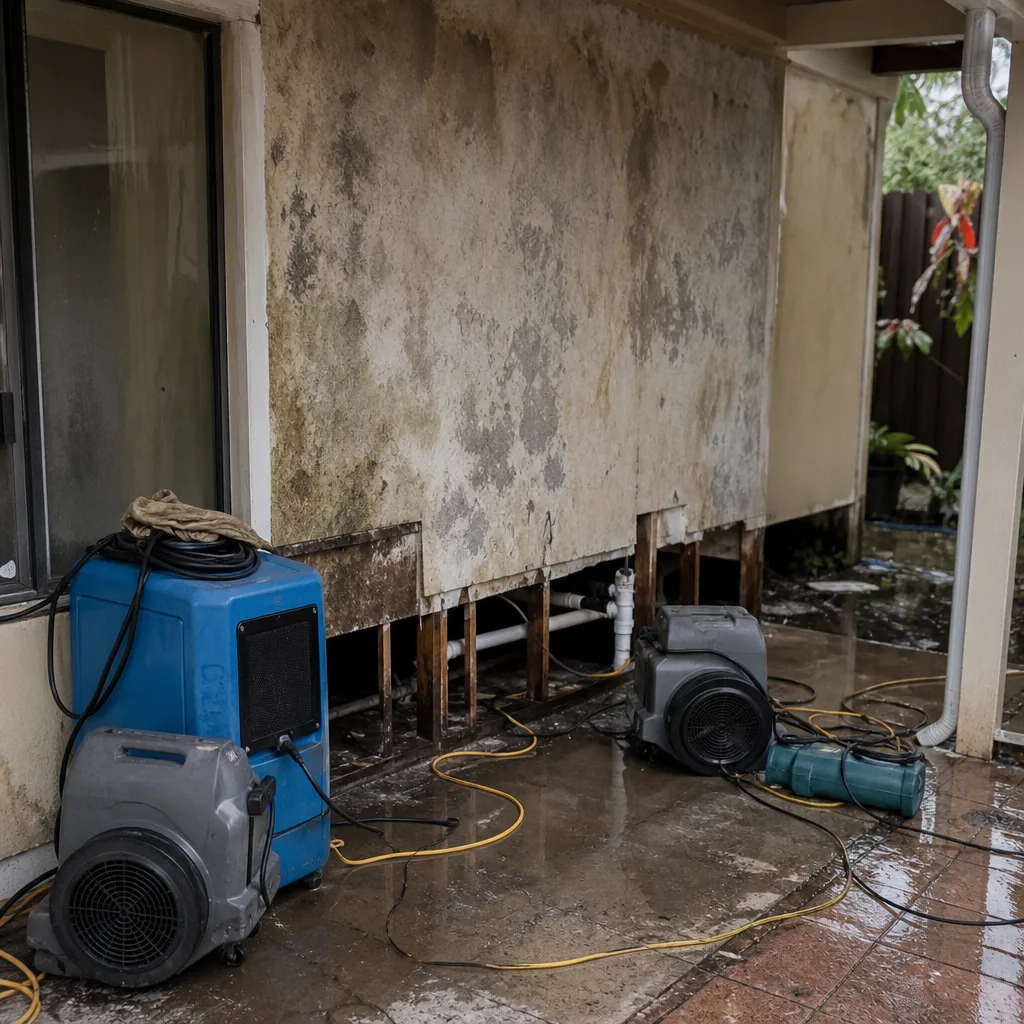 Before
 After
After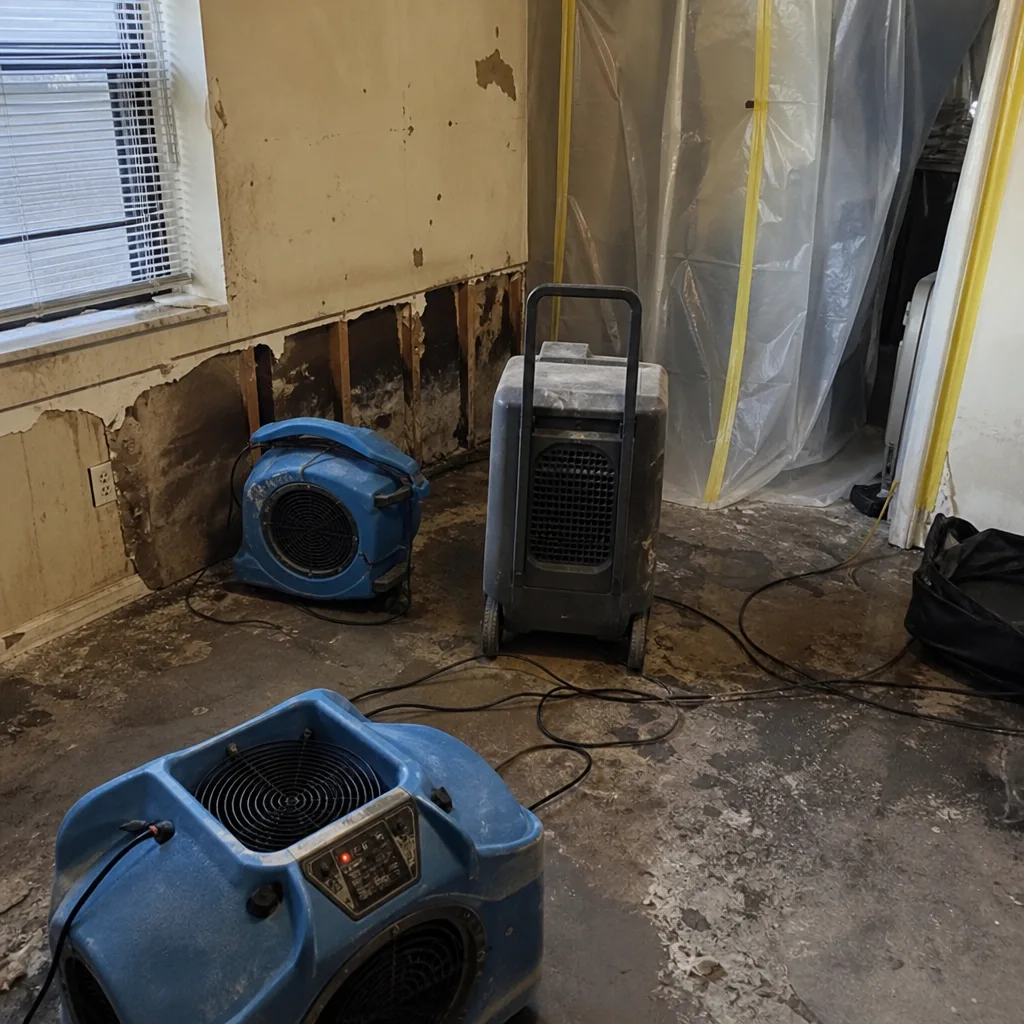 Before
 After
After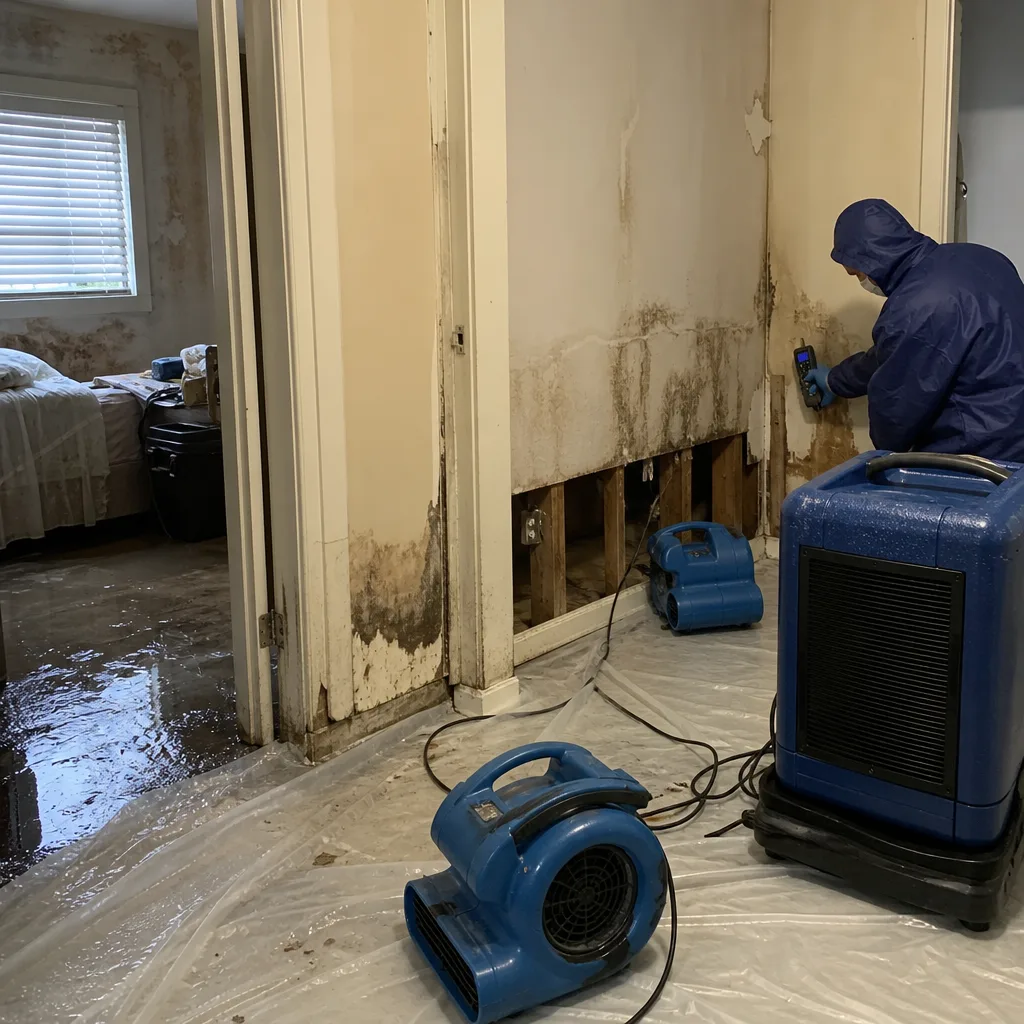 Before
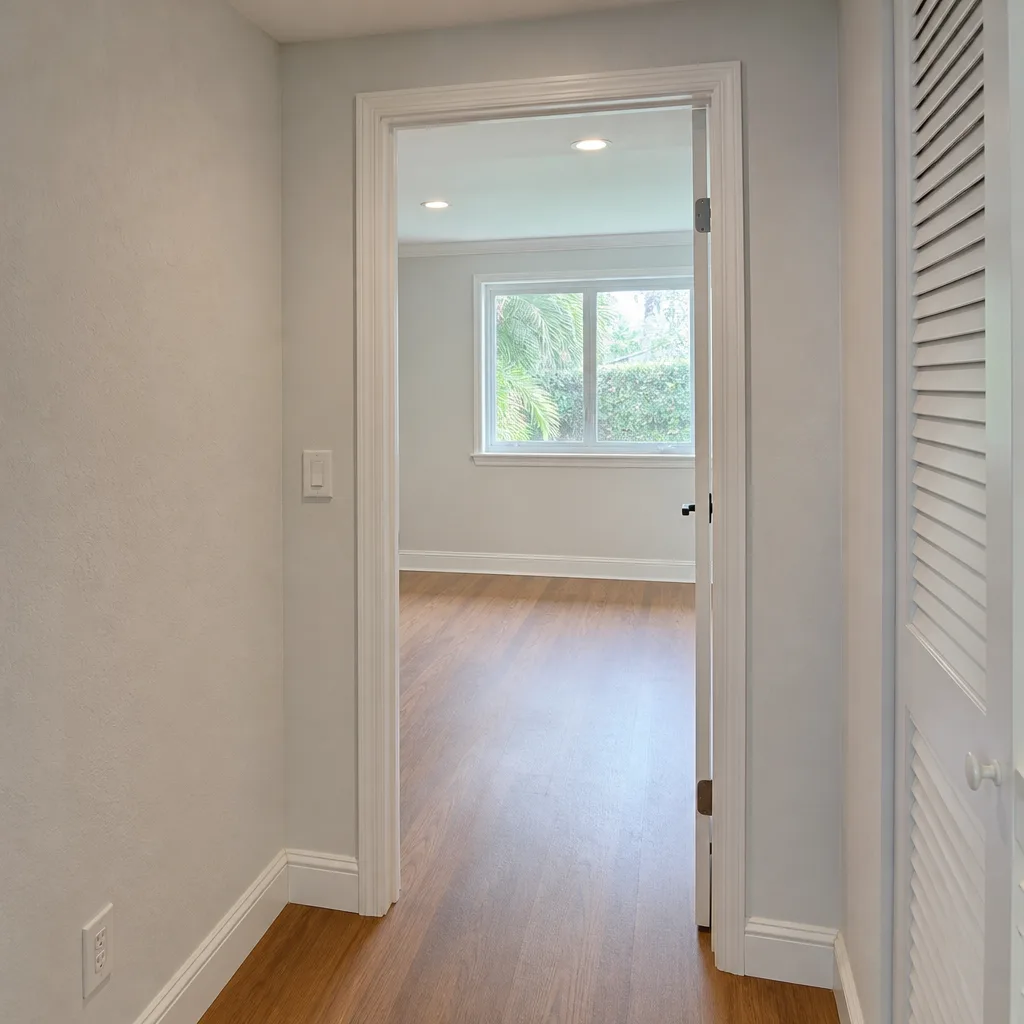 After
AfterWhen to Call a Professional
Call a professional the moment any of these conditions are true: the water is gray or black (Category 2 or 3), the affected area is larger than 10 square feet, water has touched drywall, baseboards, subflooring, framing, or HVAC ductwork, the water has been sitting for more than 24 hours, or you smell mustiness at any point after the event. Each of these conditions moves you out of DIY territory, and in Miami, delaying the call only makes the job bigger. Wendell Restoration Miami offers free estimates across the city. Call (850) 909-7064 and a live person answers, day or night. We’ll tell you what category you’re in, what it will cost, and put the price in writing before any work starts.
Frequently Asked Questions
Professional water damage restoration in Miami typically runs between $1,200 and $6,000 for Category 1 water under 500 square feet, with the average job landing around $2,500 to $4,000. Category 2 and 3 water with contamination, larger affected areas, or structural involvement can push costs to $10,000 or more. The single biggest cost driver is how long the water sat before professional drying began, which is why call speed matters more than the original volume of water. Call (850) 909-7064 for a free estimate on your specific situation.
You can dry small Category 1 spills under 10 square feet on non-porous surfaces if you act within 24 hours, but fans and consumer dehumidifiers cannot dry wall cavities, subflooring, or carpet padding in Miami’s humidity. The equipment is not powerful enough, and without a moisture meter, you have no way to verify the space is actually dry. Partial drying in Miami is the most common cause of the mold growth we remediate.
Most Miami homeowner policies cover sudden and accidental water damage from sources like burst pipes or supply line failures, but they require prompt professional mitigation, and coverage for mold is often capped or excluded unless the mold resulted from a covered water event. DIY drying that leaves residual moisture can give an adjuster grounds to reduce or deny the claim. Direct adjuster coordination, photo documentation, and professional moisture logs are the strongest protection for your claim.
Professional drying typically takes 3 to 5 days for Category 1 water with proper equipment, but Miami’s humidity can extend drying time for deeply saturated materials. Full restoration including repairs takes longer, often 1 to 3 weeks depending on the extent of the damage and the materials involved. The drying phase is complete when moisture meter readings hit the psychrometric drying goal, not when a timer expires.
Category 1 is clean water from supply lines, sink overflows, or rainwater before it touches contaminated surfaces. Category 2 is gray water from washing machines, dishwashers, or sump pump failures, which carries some contamination. Category 3 is black water from sewage, toilet overflows with feces, flood water, or any standing outdoor water that entered the home, and it requires full containment, antimicrobial treatment, and often material removal, not just drying.
Wendell Restoration Miami answers calls 24/7 with a live person, and we dispatch same day for water emergencies across the city. You get a live arrival time you can track, not a vague four-hour window, and the price is in writing before any work starts. Call (850) 909-7064 and you will speak to a person, not a phone tree.
The Bottom Line
The DIY versus professional question in Miami is not really a question about skill or cost. It is a question about moisture you cannot see and air that will not dry it. The homeowner who wins is the one who knows which category they are in before they act, and who treats a moisture meter reading as the only acceptable proof of dry. Browse our more guides & resources to stay prepared. Small, clean, immediate spills are fair game. Everything else in Miami’s climate is a professional job, and the sooner the professional arrives, the smaller the bill. Call (850) 909-7064 for a free estimate and a written price before any work begins.
Written by Blake Sorensen, Owner at Wendell Restoration Miami, serving Miami since 2006.