
Last updated October 16, 2026
 Water damage drying
 Fire & smoke cleanup
 Mold remediation
 Storm response
 Sewage cleanup
 Reconstruction
Free visual inspection and a written scope of work before any mitigation begins - photos, moisture readings, and drying logs go in your claim file
The scope we write is the scope we bill. Anything new gets shown to you, in writing, before we touch it.
Get your free estimateThe Complete Guide to Damage Restoration in Miami
Miami averages 61.9 inches of rain per year, nearly double the U.S. average, yet most damage restoration guides floating around the internet were written with a dry-climate home in mind. That mismatch costs homeowners real money and time. This guide treats Miami’s specific climate, construction, and water-event realities as the baseline, not a footnote. You’ll learn how our humidity changes drying timelines, why your concrete block walls behave differently than a Minnesota wood-frame house, what those IICRC letters actually mean on a contractor’s website, and how to avoid getting oversold when a crew is standing in your flooded living room. Whether you’re dealing with a slow AC pan leak in Coral Gables or storm surge in Brickell, you’ll finish with a working knowledge of how damage restoration should actually happen in Miami.
Restoration work we handle
Quick Answer
Damage restoration in Miami means removing water, drying the structure to a specific measurable standard (not just “until it feels dry”), treating for mold, and repairing what was torn out, all under protocols written for South Florida’s heat and humidity. In practice, Miami homeowners should expect a professional restoration company to give them a written price before work starts, use commercial drying equipment rather than box fans, and document the entire process with photos. The timeline for restoration in Miami typically runs 3 to 7 days for drying plus additional days for repairs, depending on the category of water and how long it sat before extraction began.
Table of Contents
- Miami’s Water Reality: Why National Guides Get It Wrong
- Category 1, 2, and 3 Water: What They Mean in South Florida
- How Miami Construction Traps Moisture Differently
- Drying Science in a 74% Humidity Climate
- Reading a Restoration Company’s Certifications: IICRC, RIA, and IFA
- What a Proper Restoration Process Looks Like, Step by Step
- What Restoration Costs in Miami: Real Price Ranges
- The Relay Visibility Guarantee: What Transparency Changes About Your Experience
- Common Mistakes to Avoid
- When to Call a Professional
- Frequently Asked Questions
- The Bottom Line
Miami’s Water Reality: Why National Guides Get It Wrong
Here’s the thing most national restoration guides never say: Miami is the only major U.S. metro where three separate water threats converge on the same property at once. You have hurricane-driven rain and storm surge, year-round air conditioning that generates condensation 24/7, and a water table so high that groundwater intrusion through slab foundations is a routine service call. A homeowner in Phoenix deals with maybe one of these. A homeowner in Miami deals with all three, sometimes in the same week.
That 61.9 inches of annual rainfall doesn’t fall evenly. It arrives in concentrated bursts during the May-to-October wet season, often 2 to 4 inches in a single afternoon. When that volume hits a flat, low-lying city built on porous limestone, drainage systems back up fast. We’ve seen neighborhoods in Kendall and Hialeah where a heavy afternoon thunderstorm sends water up through floor drains in ground-level bathrooms. That’s not a plumbing failure. It’s Miami hydrology, and it responds differently to treatment than a burst pipe would.
Then there’s the humidity problem. Miami’s average relative humidity sits around 74% year-round, which means the air itself is a moisture source even before any leak occurs. Building materials here never fully dry on their own the way they might in Denver or Las Vegas. A national guide that says “open the windows and let it air out” is giving advice that, in Miami, can make the problem worse. Outside air at 74% humidity does not dry a wet wall. It feeds it.
Finally, Miami’s housing stock is aging in specific ways. South Florida’s building boom of the 1960s through 1980s produced tens of thousands of concrete block homes built to the Miami-Dade hurricane codes of their era, but their plumbing systems are now 40 to 60 years old. Cast iron pipes, copper supply lines, and original AC condensate plumbing are all nearing end-of-life, and they fail in particular ways: pinhole leaks behind stucco, slow drainage from corroded cast iron, and AC drain pan overflows that drip into closets for weeks before anyone notices.
Category 1, 2, and 3 Water: What They Mean in South Florida
The restoration industry classifies water damage into three categories defined by the IICRC S500 Standard for Professional Water Damage Restoration. Here’s what each category looks like in a Miami home, because the categories map differently to our climate and building types than they do in national training videos.
Category 1: Clean Water
Category 1 water comes from a sanitary source: a broken supply line, a leaking faucet, an overflowing bathtub, or melted ice from a refrigerator line. It is not immediately dangerous, but in Miami’s heat, Category 1 water downgrades to Category 2 much faster than in cooler climates. The S500 standard assumes a 48-hour window before clean water starts supporting microbial growth. In an 80-degree Miami home with 70%+ indoor humidity, that window can compress to 24 to 36 hours. This is why we treat any Category 1 event where water has been sitting more than a day with antimicrobial protocols, even though the source was technically clean.
Category 2: Gray Water
Category 2 water contains significant contamination and can cause illness if ingested. Common Miami sources include AC condensate pan overflows (that water has been sitting in a dark, warm pan, growing biofilm), washing machine discharge, dishwasher leaks, and water that has traveled through a ceiling and picked up insulation and drywall particles along the way. In South Florida, one of the most common Category 2 events we see is the AC drain pan overflow in a high-rise condo, where condensate water mixes with years of accumulated dust and microbial growth in the pan and drain line before spilling into the closet or ceiling below.
Category 3: Black Water
Category 3 water is contaminated with pathogens, sewage, or other hazardous materials and requires full PPE, containment, and specialized disposal. In Miami, Category 3 events occur most often from three sources: storm surge and floodwater intrusion (which carries saltwater, debris, and often raw sewage from compromised infrastructure), sewage backup from the city’s aging sanitary sewer lines during heavy rain, and seawater intrusion into ground-level spaces during king tides or named storms. Saltwater intrusion deserves special attention here: seawater corrodes electrical components, warps wood, and leaves behind salt residue that continues attracting moisture even after drying. A Category 3 job in Miami requires more than drying. It requires treating for salt contamination, which is why national guides often miss a step that matters enormously on Biscayne Bay or Key Biscayne.
Our water damage restoration service in Miami handles all three categories, with different protocols, PPE levels, and disposal procedures for each.
How Miami Construction Traps Moisture Differently
Miami’s residential construction is dominated by concrete block and stucco, which behave fundamentally differently from the wood-frame homes that dominate most of the rest of the country. Understanding this difference changes how restoration equipment should be placed, how long drying actually takes, and why some national “best practices” simply do not apply here.
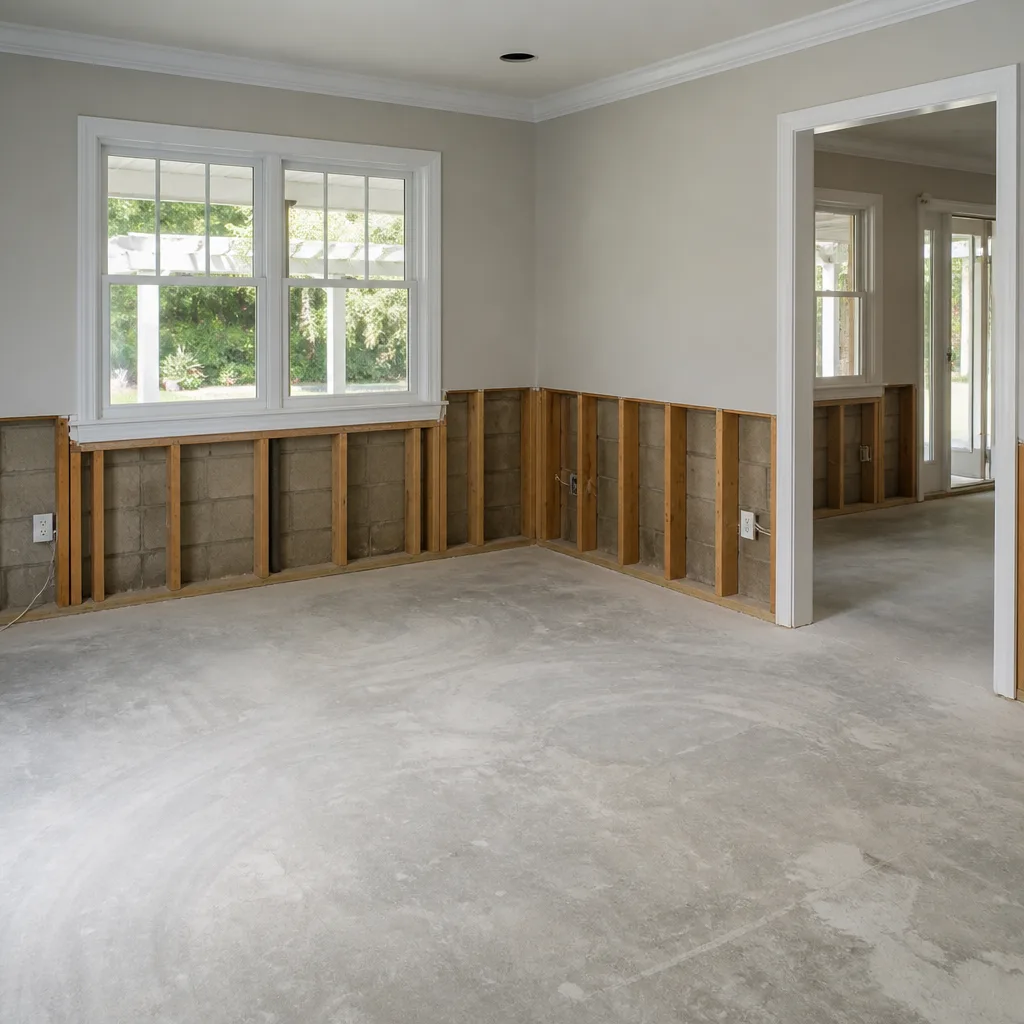
The key fact: concrete block is porous and thermally massive. When a concrete block wall gets wet, water penetrates into the block cells and the wall holds that moisture far longer than a wood stud wall would. Wood framing dries relatively quickly once you remove the drywall and expose it to airflow. Concrete block acts like a sponge that releases moisture slowly, often for weeks. That’s why restoration professionals in Miami use moisture meters designed for masonry and extend drying times for block walls compared to national averages.
Stucco adds another layer of complexity. Stucco is cementitious and vapor-permeable, but when it sits over a water barrier on a block wall, it can create a cavity that traps moisture between the stucco exterior and the block interior. In Miami’s climate, that trapped moisture can sit in the wall cavity for months without proper intervention. We regularly see homes in neighborhoods like Westchester and Allapattah where a slow plumbing leak inside a block wall has been feeding hidden mold growth for six months before any visible sign appears on the paint.
Floor assemblies in Miami present their own challenges. Many South Florida homes sit on concrete slabs without basements, which means water intrusion from below (high water table, storm event, slab plumbing leak) wicks directly through the slab and into flooring, baseboards, and anything stored on the floor. Tile, the most common flooring in Miami homes, is waterproof itself but traps moisture beneath it. We’ve seen countless cases where a homeowner notices musty odors and lifts a tile to find standing water underneath that has been there for weeks. Restoration in these cases means removing the tile, drying the slab to a measurable standard, and treating the slab surface before new flooring goes down.
Drying Science in a 74% Humidity Climate
Drying a water-damaged structure is governed by physics, not opinion. The process is called psychrometric drying, which is a technical term for tracking the relationship between air temperature, relative humidity, and the moisture content of building materials. The goal is not just to remove standing water. The goal is to drive the moisture content of every affected material down to its dry standard, a specific number that varies by material. Drywall has a dry standard around 5-12% moisture content. Hardwood floors around 6-9%. Concrete slabs need to reach their specific dry standard before any flooring goes back down. If you don’t hit those numbers, you’re setting up the home for mold, warping, and adhesion failures down the road.
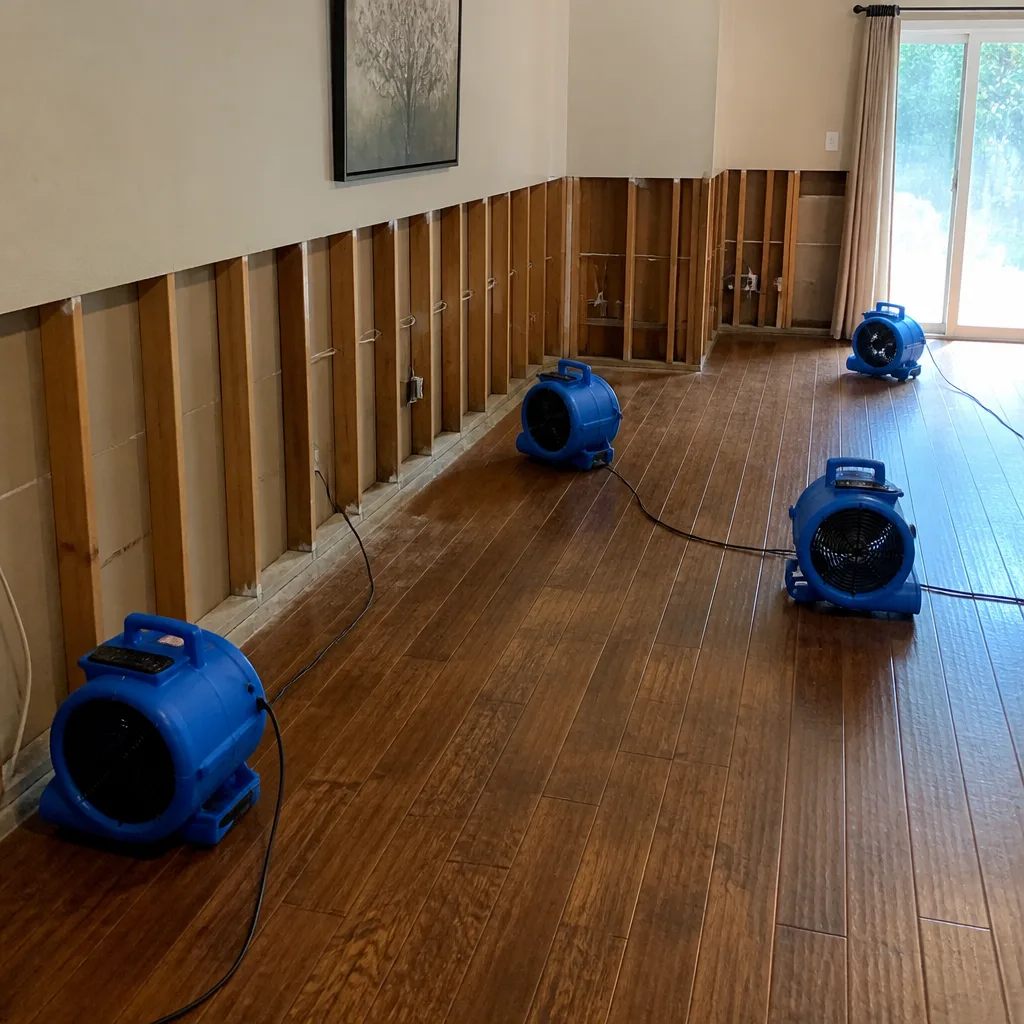
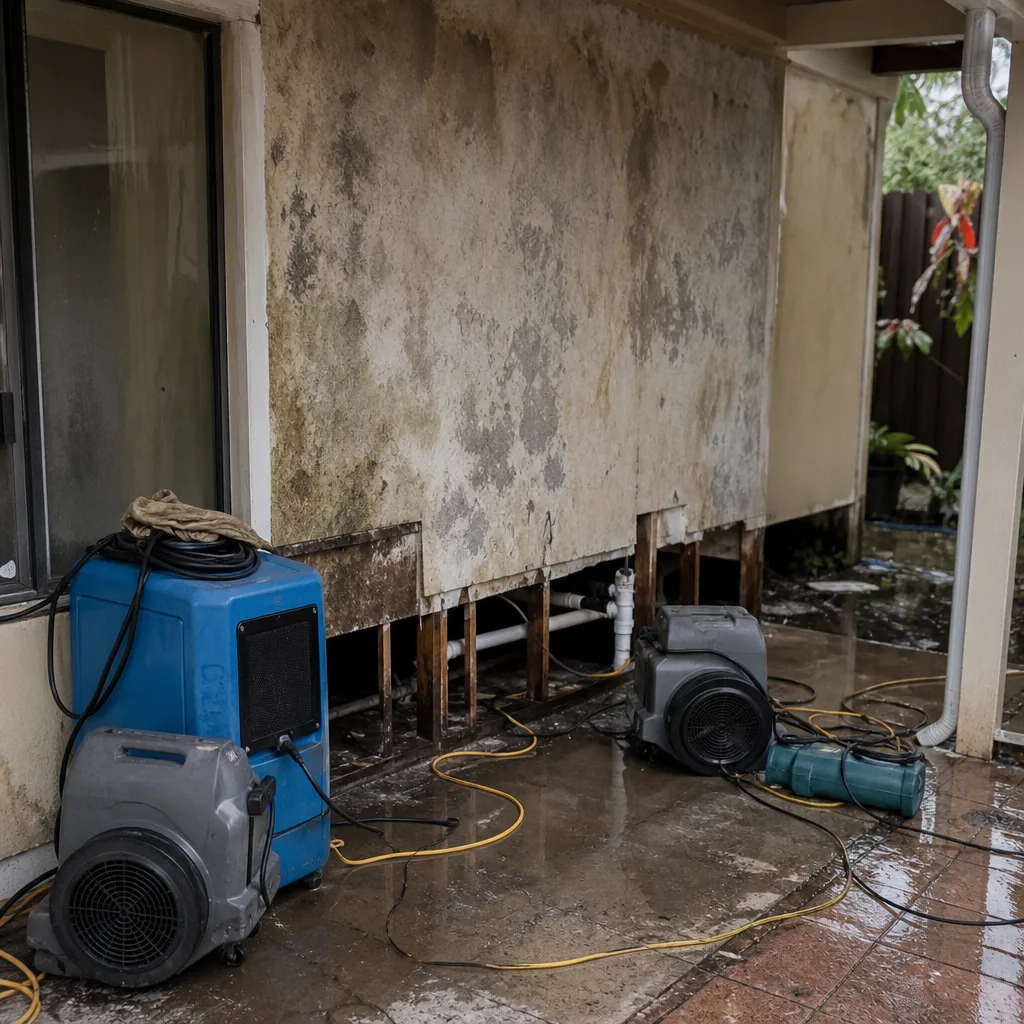
Here’s where Miami’s climate changes the equation. The national “72-hour drying” benchmark that gets quoted in online guides assumes you’re operating in a climate where outdoor air is relatively dry and you can ventilate effectively. In Miami, with outdoor humidity often at 70-90%, ventilation alone is not a drying strategy. Restoration professionals here rely on closed-system drying: sealed containment, commercial dehumidifiers (we use Dri-Eaz, Phoenix, and XPOWER units), and high-velocity air movers (including B-Air equipment) that create a controlled drying environment independent of outdoor conditions.
If your restoration company shows up with box fans and opens the windows, they are not doing Miami-grade restoration. The equipment that moves enough air and removes enough moisture to actually dry a structure below our ambient humidity costs tens of thousands of dollars per job. A box fan circulates air but removes zero moisture.
Drying timelines in Miami typically run longer than national averages. A Category 1 water loss in a dry climate might resolve in 48 to 72 hours. The same loss in a Miami home, especially one with concrete block walls or a wet slab, routinely takes 4 to 7 days of active drying before measurements hit their targets. Anyone promising a “one-day dry” is either not measuring properly or is leaving the structure wet.
Reading a Restoration Company’s Certifications: IICRC, RIA, and IFA
Homeowners in Miami routinely see logos on restoration company websites without knowing what they actually mean. Here’s a plain-language guide to the three certification bodies you should understand before signing any restoration contract.
IICRC: The Institute of Inspection, Cleaning and Restoration Certification
The IICRC is the primary standards-setting body for the restoration industry, and the S500 Standard for Professional Water Damage Restoration is the specific document that should govern any water damage job. The S500 defines how water should be categorized, how affected materials should be assessed, what drying standards should be used, and how equipment should be placed. A company that says it follows “IICRC standards” is claiming to follow the S500. Wendell Restoration Miami follows IICRC, RIA, and IFA standards on every job, which means your restoration is governed by the same written protocols used on large commercial loss sites.
RIA: Restoration Industry Association
The RIA is the trade association for restoration professionals, and its standards emphasize ethics and documentation. RIA-affiliated companies commit to written scopes of work, documented drying logs, and transparency with insurance carriers and homeowners alike. The RIA’s emphasis on documentation matters to you because a documented drying log is your evidence if an adjuster questions why drying took five days instead of three.
IFA: Institute of Inspection, Cleaning and Restoration Certification (Associate)
The IFA designation signals additional training in inspection and assessment, which matters most when a loss is complex: a multi-room flood, a Category 3 event, or any job where hidden moisture behind walls or under flooring needs to be identified before remediation begins. A proper assessment before demolition starts saves you from unnecessary tear-outs or, worse, incomplete removal that leaves moisture trapped behind finished surfaces.
When you’re evaluating a restoration company in Miami, ask directly: “Do you follow the IICRC S500 standard on my job?” If the answer is anything other than an immediate yes, keep looking.
What a Proper Restoration Process Looks Like, Step by Step
Here is the sequence a professional restoration company in Miami should follow, from the moment you call to the moment you get your final invoice. Understanding this sequence helps you evaluate whether you’re working with a real restoration firm or a cleanup crew with a website.
- Immediate response and assessment. A real restoration company answers the phone and gets a crew to your home quickly when the situation is urgent. The assessment should include moisture readings, not just a visual inspection. The technician should map affected areas with a moisture meter and identify whether water has migrated into walls, under flooring, or into adjacent rooms. In Miami, this assessment must also account for category of water and the age of the loss, since our climate accelerates microbial growth.
- Written scope and pricing before work starts. This is where Wendell’s no-hassle upfront pricing changes the experience: the price is put in writing before any work starts, and a digital invoice is texted so you can pay from the link. The number on the screen is the number you pay. You should never agree to an open-ended hourly restoration contract where the price is “determined later.”
- Water extraction. Standing water is removed using professional extraction equipment: truck-mounted extractors for major floods, portable extractors for smaller losses. This step also includes removing saturated carpet, pad, and any unsalvageable materials. In a Miami Category 3 event, disposal must follow specific containment and bagging protocols to prevent cross-contamination.
- Containment and drying setup. Affected areas are contained with plastic sheeting to create a closed drying environment. Commercial dehumidifiers and air movers are positioned according to the drying plan, not just scattered around. On Miami block walls, this often means specialized placement to drive moisture out of masonry, not just surface materials. We use professional-grade equipment from Dri-Eaz, Phoenix, XPOWER, B-Air, and Injectidry, deployed under IICRC, RIA, and IFA standards.
- Daily monitoring and adjustment. Drying progress is measured daily with moisture meters, and equipment placement is adjusted based on those readings. This is psychrometric drying in action: tracking the air’s moisture level so we know when your home is truly dry, not just surface-dry.
- Antimicrobial treatment and mold prevention. In Miami’s climate, you cannot skip this step. Once materials are dry, affected surfaces should be treated with an EPA-registered antimicrobial to prevent mold growth. This is especially critical on concrete and masonry surfaces that hold moisture longer than wood.
- Removal of unsalvageable materials and reconstruction prep. Drywall that has wicked water above the flood line, cabinets that have swelled, insulation that has compacted: these materials should come out. A good restoration company shows you exactly what’s being removed and why, with photos documenting the condition before demolition.
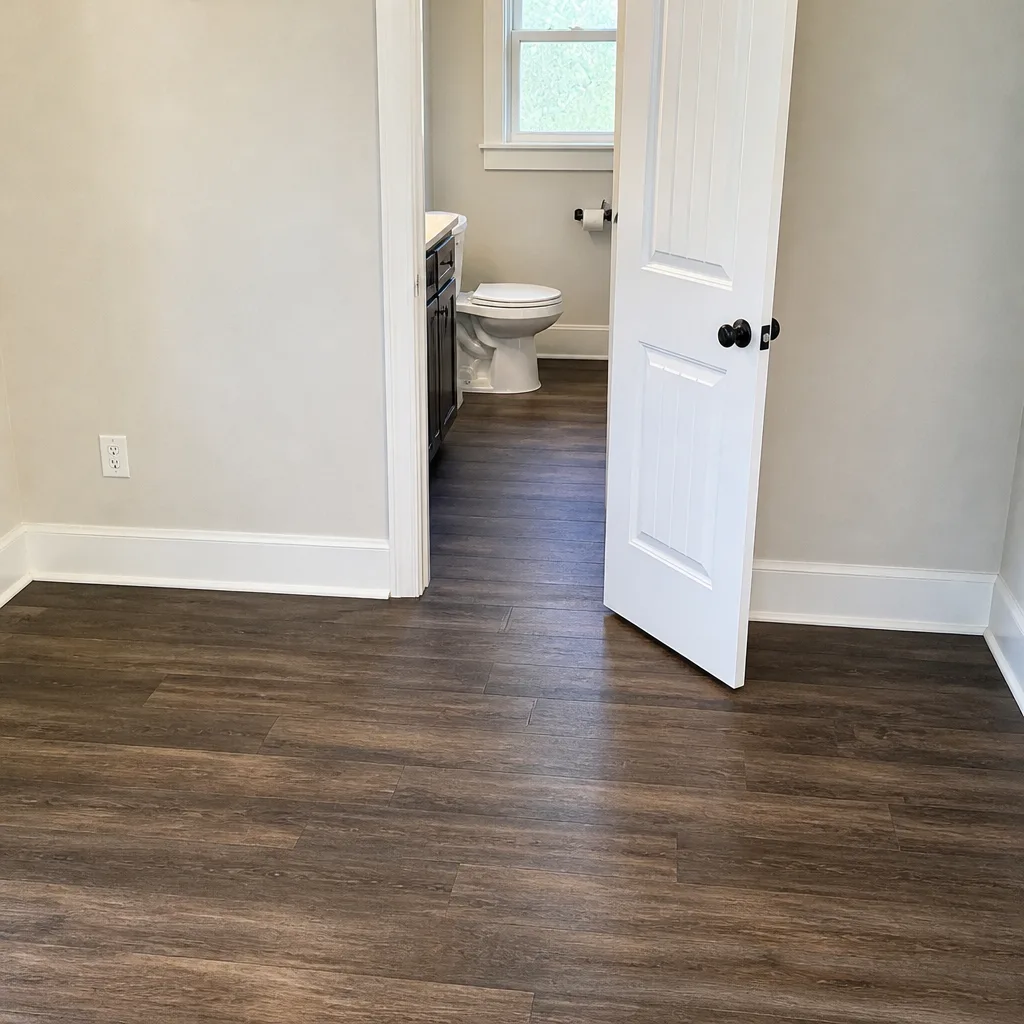
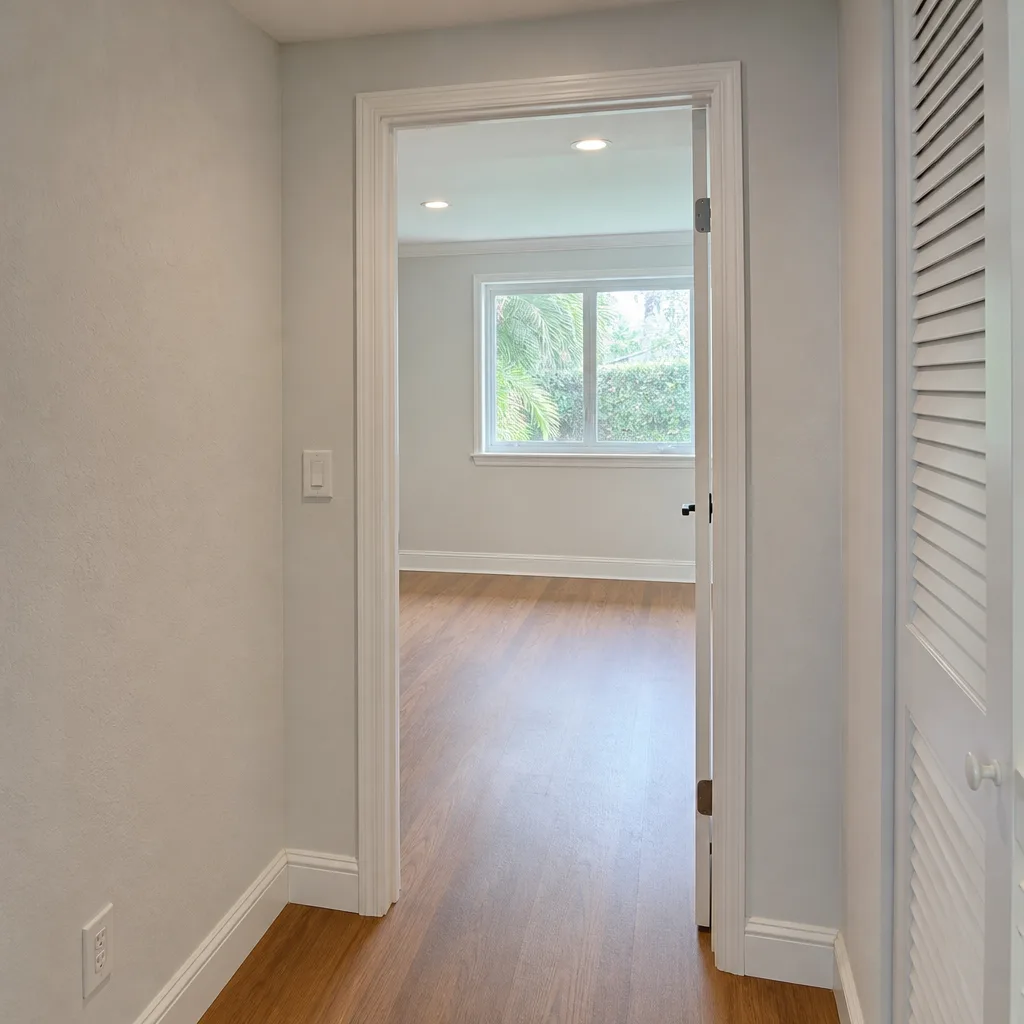
- Repairs and rebuilding. This is where our water damage repair service in Miami takes over: drywall replacement, trim, paint, flooring, and any cabinetry or fixture work. Repairs should be scoped in writing the same way the extraction and drying were.
- Final documentation. You should receive before-and-after photos, drying logs, a summary of work performed, and a final invoice. Wendell texts before-and-after photo updates throughout the job, so you see the work as it happens, not just in a report at the end.
What Restoration Costs in Miami: Real Price Ranges
Actual prices in the Miami market vary by scope, category of water, and the age of the loss, but here are the ranges you should expect for common restoration scenarios in this region. These figures reflect typical residential jobs in Miami-Dade County as of 2026. Every job at Wendell comes with a written price before any work starts, so the number below is intentionally a range, and your actual quote will be line-item specific.
| Restoration Scenario | Typical Miami Price Range | What It Includes |
|---|---|---|
| Category 1 water extraction, small area (under 100 sq ft) | $400 to $900 | Extraction, equipment setup, 2-4 days of drying, antimicrobial treatment |
| Category 1 water extraction, full room | $1,000 to $2,500 | Extraction, containment, 4-7 days of drying, daily monitoring, treatment |
| Category 2 (AC pan overflow, gray water) | $1,500 to $3,500 | Extraction, containment, drying, antimicrobial, often includes minor ceiling or drywall removal |
| Category 3 (sewage, storm surge, floodwater) | $3,000 to $8,000+ | Full containment, PPE, contaminated material removal and disposal, drying, full antimicrobial treatment |
| Mold remediation, single room | $1,500 to $5,000 | Containment, HEPA filtration, removal of affected materials, treatment, post-remediation verification |
| Mold remediation, whole home | $8,000 to $25,000+ | Full containment, multi-room removal, HVAC cleaning, post-remediation verification |
| Water damage repair (post-drying rebuild) | $2,000 to $15,000+ | Drywall, trim, paint, flooring, cabinetry work depending on scope |
These ranges assume a typical Miami home. A high-rise condo in Edgewater with association restrictions, or a 1920s bungalow in Coconut Grove with original plaster and wood floors, will shift the numbers. Call (850) 909-7064 for an exact quote on your specific situation. Estimates are free, and you’ll get the price in writing before any work starts.
For anything related to mold, see our mold remediation service in Miami, which handles everything from a single closet to a whole-home remediation with full containment.
The Relay Visibility Guarantee: What Transparency Changes About Your Experience
The restoration industry has a reputation problem, and it’s earned. Homeowners call in an emergency, a crew shows up at some point, the price keeps changing, and nobody can tell you when it will be done. Wendell Water Damage Restoration was built to answer that problem directly, as part of the Relay Home Co. family, founded in 2006.
Here’s what the Relay Visibility Guarantee means in practical terms when you call Wendell Restoration Miami:
- Live person answers every call, 24/7. Water damage does not keep business hours, and neither does Wendell. You get a human on the phone, not a voicemail, not a callback queue, not a phone tree.
- Written price before any work starts. The price is the price. A digital invoice is texted to your phone, and you can pay from the link. The number on the screen is the number you pay.
- Live technician arrival time you can track. Background-checked, uniformed technicians show up with a live arrival time, not a vague four-hour window. You know exactly who is walking through your door before they arrive.
- Before-and-after photos by text. You see the work as it happens. When a wall comes out, you get a photo. When the drying targets are hit, you get a photo. When the rebuild is complete, you get a photo. No mystery, no “trust us.”
- 365-Day Done Right Promise. If it’s not done right, we make it right. This is stated in writing on every job, not buried in fine print. And if a repair fails within that year, you get a free second visit.
This level of transparency exists because the industry standard is, frankly, not good enough. A homeowner dealing with a flooded kitchen shouldn’t have to wonder whether the company will show up, what it will cost, or whether the work will hold up. The Relay Standard was built to give you answers to those questions before you have to ask.
Common Mistakes to Avoid
- Waiting to call because “it’s just a little water.” In Miami’s climate, moisture breeds mold fast. A small leak under a sink left for a weekend in an air-conditioned Miami home can become a mold remediation job by Monday. Call the same day.
- Using a shop vac and box fans instead of professional extraction. Shop vacs remove surface water but leave the water inside walls, under floors, and in concrete. Box fans move air but remove zero moisture. In Miami’s humidity, this approach often leaves the structure wetter than the air around it.
- Opening windows to “let it air out.” That 74% outdoor humidity is the enemy. Opening windows introduces more moisture into the drying environment, feeds existing microbial growth, and extends the timeline.
- Accepting a verbal estimate. Never start restoration work without a written price. An honest company puts the number in writing, sends you a digital invoice, and stands behind it. If the price can’t be written down, there’s a reason.
- Letting the restoration company also do the mold assessment without independent verification. A company that both remediates and “verifies” its own work has an obvious incentive problem. Ask for post-remediation verification from a third party, especially on large or health-sensitive jobs.
- Painting over water stains. If water damage stains are painted over without the underlying material being properly dried and treated, the stain will return, often with mold behind it. Stain-blocking primer is not remediation.
- Assuming your insurance adjuster knows Miami construction. Adjusters working national claims often apply dry-climate assumptions to Miami losses. A restoration company that documents moisture readings, drying logs, and photo evidence is your best protection against an underpaid claim.
When to Call a Professional
Call a professional restoration company when any of these conditions are true: water has sat for more than 24 hours, the affected area is larger than a single room, the water source is a sewage backup or storm surge, water has wicked into walls or under flooring, anyone in the home has respiratory issues or a compromised immune system, or you’re seeing any visible mold growth or persistent musty odor. Miami’s climate compresses the timeline on every one of these scenarios. Wendell Restoration Miami offers free estimates in Miami, call (850) 909-7064, and a live person answers 24/7. We’ll give you a written price before any work starts, and you’ll know exactly when a technician will arrive.
Frequently Asked Questions
In Miami, water damage restoration typically takes 3 to 7 days of active drying plus additional days for repairs, depending on the category of water, the affected area size, and how long the water sat before extraction began. Miami’s 74% average relative humidity extends drying timelines compared to drier climates, because building materials here never fully dry on their own without mechanical dehumidification.
For a precise timeline on your specific situation, call (850) 909-7064. The estimate includes a written drying plan with daily monitoring targets.
Water damage restoration in Miami typically costs between $400 for a small Category 1 extraction and $25,000+ for a whole-home Category 3 or full mold remediation, with most residential water losses falling between $1,000 and $8,000 depending on scope, category, and affected area.
Call (850) 909-7064 for a written, line-item estimate on your job. Every quote includes the full scope before any work starts.
Homeowner’s insurance typically covers sudden and accidental water damage from sources like burst pipes or appliance failures, but coverage for flood damage (storm surge, rising groundwater) requires a separate flood insurance policy. Miami homeowners often carry both, but the distinction matters: a Category 1 pipe burst is a standard claim, while a Category 3 storm surge event may be a flood claim with different deductibles and limits. Wendell provides photo documentation and drying logs that support your claim, and we coordinate directly with adjusters to make sure the documented scope matches the covered loss.
A live person answers every call at Wendell, 24/7, and technicians are dispatched with a live arrival time you can track, not a vague window. In an active water event, we prioritize same-day response because Miami’s climate accelerates microbial growth quickly. The technician who arrives will be background-checked and uniformed, and you’ll know their name and arrival time before they walk through your door.
That depends on the affected area and the source of the moisture. Surface mold on non-porous materials like tile or glass can sometimes be cleaned with proper antimicrobial products. Mold that has penetrated drywall, wood, insulation, or carpet pad requires removal of those materials, not surface cleaning, because the mold’s root structure lives inside the material. In Miami’s climate, surface cleaning alone often fails within months because ambient humidity allows regrowth. A professional assessment with moisture readings is the only way to answer definitively.
At Wendell, we coordinate directly with your adjuster: providing documentation, photos, moisture logs, and the written scope of work. You should not be the middleman translating restoration terms to an insurance company. Our documentation is built to insurance industry standards specifically so your claim proceeds without you having to manage a back-and-forth. Call (850) 909-7064 and we’ll walk you through exactly what your policy covers and how the documentation process works.
The Bottom Line
Damage restoration in Miami is a different discipline from damage restoration anywhere else. The humidity, the concrete block construction, the water table, and the specific categories of water we face from hurricanes, storm surge, and aging plumbing all change how drying should be done, how long it takes, and what equipment is required. A national guide cannot tell you that your block wall will hold moisture for weeks after a leak. A Miami restoration company can. If you’re dealing with water damage or mold in Miami, the most important decision is who you call first. Call (850) 909-7064 for a free estimate. A live person answers, the price goes in writing before any work starts, and you’ll get a written guarantee on every repair, underlined by our 365-Day Done Right Promise.
For more on specific situations, visit our Wendell Restoration Miami home page, or read our detailed guides on water damage restoration in Miami, mold remediation in Miami, and water damage repair in Miami.
Written by Blake Sorensen, Owner at Wendell Restoration Miami, serving Miami since 2006.
See the difference
 Before
 After
After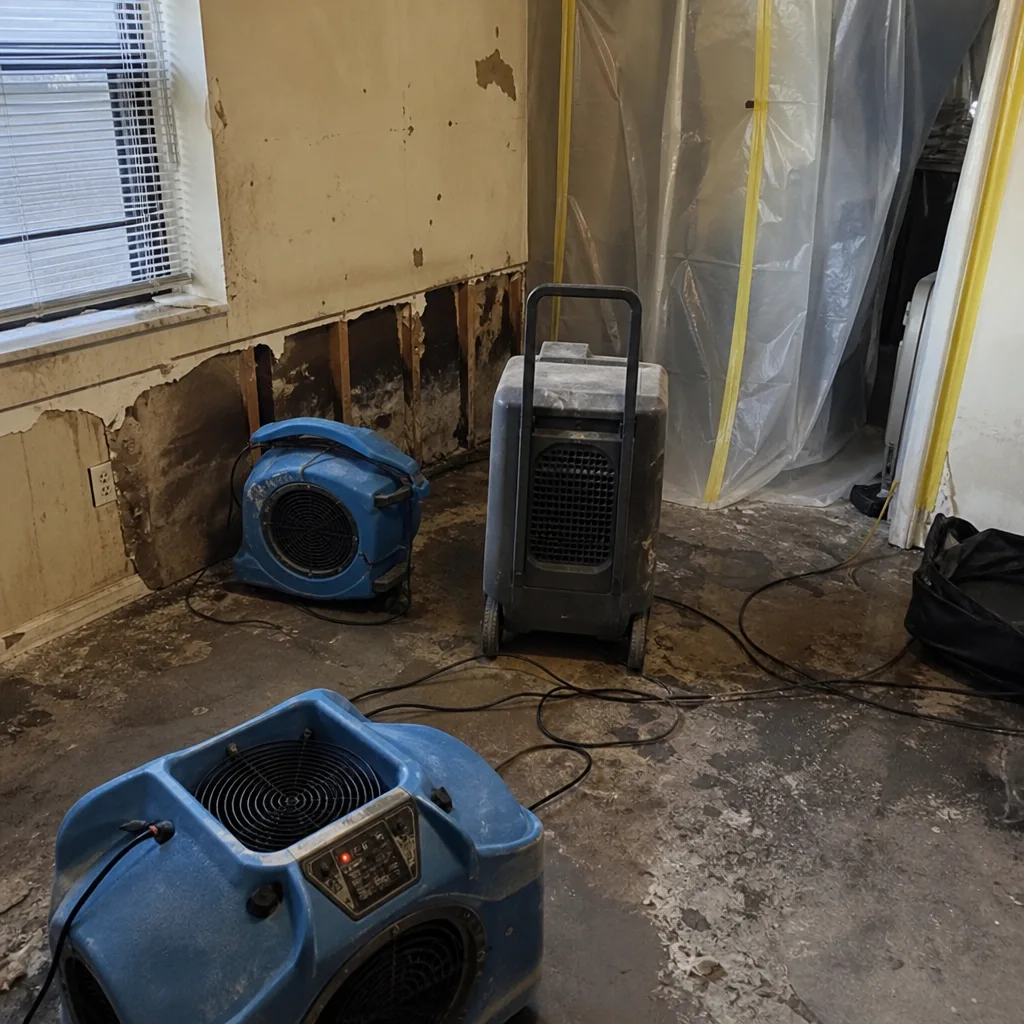 Before
 After
After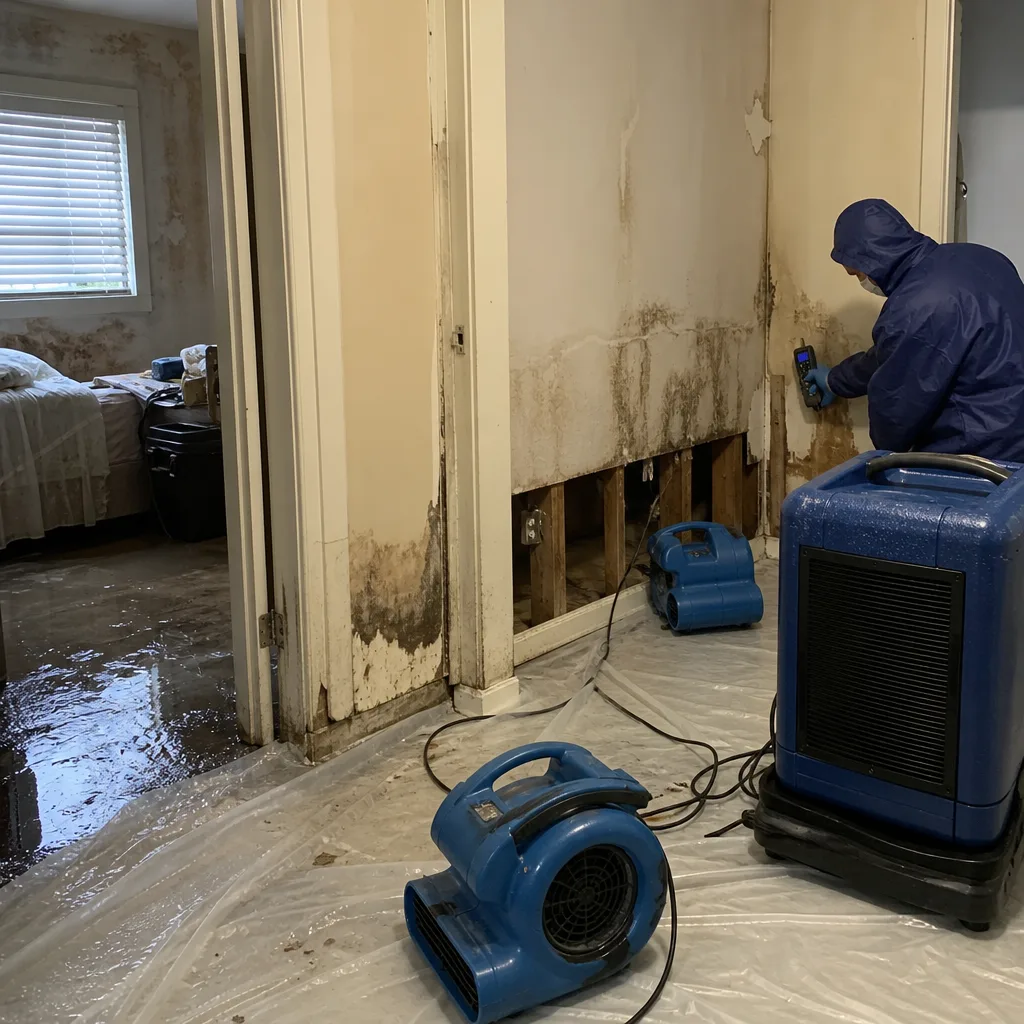 Before
 After
After